What Are the Warning Signs of a Cybersecurity Gap in Your Organization?
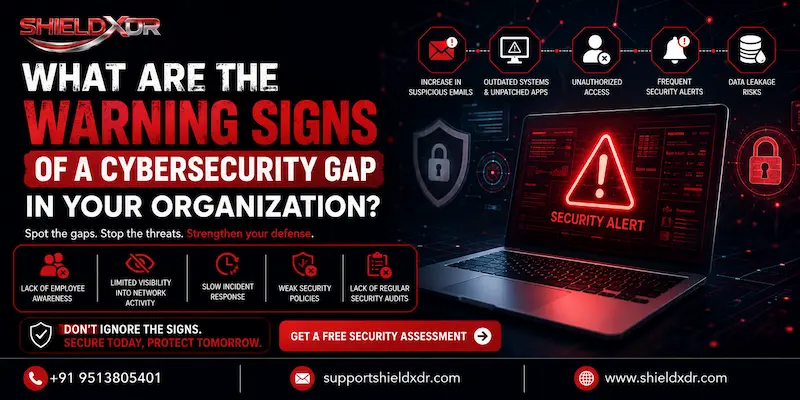
Do you know how the Warning Signs of a Cybersecurity Gap can help organizations to reduce cyberattacks and improve cybersecurity measures? If not, then you are at the right place. Here, we will talk about the Cybersecurity Gap and related benefits in detail.
Moreover, we will introduce you to a reliable XDR solution offered by a reputable VAPT service provider. What are we waiting for? Let’s get started!
What is the Cybersecurity Gap?
The cybersecurity gap denotes the considerable disparity between the swiftly increasing volume and complexity of global cyber threats and the workforce, budget, and technological defenses that are available to address them.
The main cause of this divide is the acute lack of qualified cybersecurity professionals, combined with organizations' slow uptake of advanced security measures. This vulnerability thus exposes vital digital infrastructure, resulting in a high-risk setting in which assailants often surpass defenders.
Let’s take a look at what are the Warning Signs of a Cybersecurity Gap and see what benefits working on these cybersecurity gaps brings!
Why Identifying Cybersecurity Gaps Early Matters?
|
S.No. |
Factors |
Why? |
|
1. |
Minimizes Financial and Reputational Damage |
It avoids expensive data breaches and the legal penalties that follow, all while preserving customer trust and the integrity of the brand. |
|
2. |
Prevents Threat Escalation |
It prevents the exploitation of minor vulnerabilities and their escalation into widespread, catastrophic network breaches. |
|
3. |
Enables Proactive Defense |
It enables organizations to foresee and counteract the strategies of attackers before these attackers directly target their systems. |
|
4. |
Ensures Continuous Compliance |
It assists companies in consistently aligning with changing regulatory standards, thus preventing unforeseen penalties and legal liabilities. |
|
5. |
Protects Intellectual Property and Critical Data |
It protects sensitive customer data, trade secrets, and proprietary information from theft or leakage to competitors. |
Common Warning Signs of a Cybersecurity Gap in Your Organization
The following are some common warning signs of a cybersecurity gap in your organization:
1. A Surge in "Near-Misses" and Successful Phishing Attempts: Employees often succumb to scams or barely evade significant breaches.
2. Slow Incident Response and Resolution Times: It takes security teams too long to identify, contain, and resolve active threats on the network.
3. Outdated Software and Unpatched Vulnerabilities: Applications and systems operate on legacy code that contains recognized security vulnerabilities that have not been resolved.
4. Lack of Continuous Employee Security Training: Due to infrequent and outdated training, staff members are not aware of modern threat tactics.
5. Shadow IT and Unmonitored Devices: Staff members utilize personal devices and unapproved applications without the awareness or supervision of the IT department.
How Weak Access Controls Create Security Risks?
Weak access controls create security risks in the following ways:
● Facilitates Unauthorized Data Access: Low-level users or external attackers can easily access, steal, or alter highly sensitive company data due to permissive permissions.
● Enables Lateral Movement: By exploiting just one vulnerable account, intruders can move laterally through the network and reach more sensitive systems.
● Increases the Risk of Privilege Creep: As employees change roles, they accumulate excessive access rights that have not been revoked, thereby widening the potential attack surface.
● Heightens Vulnerability to Credential Stuffing: Weak password policies and the absence of MFA make it easy for hackers to take over accounts with leaked passwords from other sites.
● Blurs Accountability and Audit Trails: Credentials that are poorly tracked or shared make it almost impossible to determine exactly who or what caused a security breach.
Why are Outdated Software and Unpatched Systems Are Dangerous?
|
S.No. |
Factors |
Why? |
|
1. |
They Leave Known Doors Wide Open |
Vulnerabilities that are made public provide hackers with a precise instruction manual on how to infiltrate your systems. |
|
2. |
They Lack Modern Defense Mechanisms |
Legacy code does not include modern security features necessary for identifying and combating advanced, developing threat strategies. |
|
3. |
They Invite Devastating Ransomware Attacks |
Exploit kits focus on unpatched vulnerabilities to quickly introduce malware capable of locking down complete corporate networks. |
|
4. |
They Create Weak Links in Supply Chains |
Attackers can exploit vulnerable software in your environment as a stepping stone to compromise your vendors and clients. |
|
5. |
They Cost More Than Maintenance |
The financial consequences of a significant data breach are far greater than the regular expenses associated with timely software updates and patches. |
The Impact of Poor Employee Cybersecurity Awareness
The following are the impacts of poor employee cybersecurity awareness:
a) Increases Susceptibility to Phishing: Staff without training are easy targets for misleading emails, and they may inadvertently provide sensitive login details and company information.
b) Creates Accidental Insider Threats: Due to a lack of security knowledge, employees who have good intentions inadvertently leak data, misconfigure settings, or download malware.
c) Delays Threat Detection and Reporting: Due to staff members' inability to identify suspicious behavior, attackers can stay concealed within the network for extended durations.
d) Bypasses Expensive Technical Controls: A single employee clicking on a harmful link can completely undermine even the most sophisticated and expensive security software.
e) Damages Compliance and Trust: Human error frequently results in expensive violations of regulatory compliance, damaging corporate reputation and customer trust.
Why Do Frequent Phishing Incidents Indicate a Security Gap?
Frequent phishing incidents indicate a security gap for the following reasons:
1. Inadequate Technical Filtering: Your email security gateways are not successfully preventing harmful emails from arriving in inboxes.
2. Deficient Security Awareness Training: Workers do not possess the essential abilities required to identify and steer clear of contemporary social engineering strategies.
3. Weak Endpoint and Access Controls: Attachments and links with malicious intent can easily evade device protections and take advantage of extensive user permissions.
4. Flawed Incident Reporting Culture: Without reporting suspicious emails, staff members leave security teams unaware of ongoing campaigns.
5. Lack of Proactive Threat Simulation: To identify and address behavioral weaknesses, the organization seldom assesses its defenses through simulated phishing attacks.
Signs Your Organization Lacks Effective Network Monitoring
|
S.No. |
Signs |
What? |
|
1. |
You Only Learn of Breaches from Third Parties |
Before your internal team is aware of a breach, law enforcement or clients find out about your compromised data. |
|
2. |
A Lack of Centralized Visibility (Blind Spots) |
Unmanaged segments, remote devices, and cloud environments function entirely out of sight from your security team. |
|
3. |
High Volumes of Alert Fatigue with Zero Context |
Due to the inundation of thousands of unrelated alerts, staff are unable to catch genuine, crucial security events. |
|
4. |
No Baseline for "Normal" Network Behavior |
The security team is unable to detect anomalies due to their lack of knowledge regarding the appearance of standard, everyday data traffic. |
|
5. |
Excessive Investigation and Resolution Times |
Because of the absence of activity logs and data, it can take days or weeks to determine the underlying cause of a network issue. |
How to Conduct a Cybersecurity Gap Assessment?
You can conduct a cybersecurity gap assessment in the following ways:
● Select a Security Framework: Select an industry-standard model such as NIST or ISO 27001 to create a structured benchmark for your security practices.
● Evaluate Your Current State: Examine your current policies, technical controls, and employee behaviors to understand how your defenses currently function.
● Analyze the Gaps: Make a direct comparison of your existing security posture with your selected framework to identify particular vulnerabilities and absent controls.
● Assess Risks and Prioritize: Assess the possible effects of each recognized gap to prioritize resource allocation for addressing the most serious threats first.
● Develop a Remediation Plan: Develop a practical roadmap that includes clear timelines, budgets, and designated owners to systematically address the security gaps.
Mapping Technical Gaps to Regulatory Compliance Frameworks
The following are mapping technical gaps to regulatory compliance frameworks:
a) Weak Access Controls Map to Identity Management Mandates: Does not comply with MFA and least-privilege principles (e.g., IAM, GDPR, HIPAA).
b) Unpatched Software Maps to Vulnerability Management Requirements: Contravenes obligatory deadlines for patching and risk assessment (e.g., PCI-DSS, SOC 2).
c) Lack of Network Monitoring Maps to Incident Response Rules: Violates the requirements of ongoing logging and swift breach notification (e.g., DORA, SEC).
d) Unencrypted Data Maps to Data Protection Regulations: Imposes harsh punishments for not safeguarding data at rest and in transit (e.g., CCPA, GDPR).
e) Deficient Employee Training Maps to Human Resources Security Standards: Does not meet the legal requirements for documented staff security awareness that is mandatory (e.g., ISO 27001).
Essential Cybersecurity Tools for Detecting Security Gaps
|
S.No. |
Tools |
Why? |
|
1. |
Vulnerability Scanners |
Automatically review networks and applications to identify unpatched software and known security vulnerabilities. |
|
2. |
SIEM and XDR Platforms |
Consolidate and scrutinize event logs to identify active threats and areas lacking visibility. |
|
3. |
Penetration Testing & Exploit Tools |
Simulate actual attacks to actively investigate and safely reveal vulnerabilities in the infrastructure. |
|
4. |
Identity & Access Management Auditing Tools |
Identify weak credentials, misconfigured permissions, and risky pathways in Active Directory. |
|
5. |
Automated Compliance & Risk Assessment Software |
Continuously monitor your internal defense controls in relation to key regulatory frameworks. |
Best Practices to Close Cybersecurity Gaps
The following are the best practices to close cybersecurity gaps:
1. Implement a Zero Trust Architecture: Implement stringent identity checks and least-privilege access for all users and devices.
2. Establish Automated Patch and Vulnerability Management: Deploy software updates automatically to address security vulnerabilities before they can be exploited by attackers.
3. Deploy Continuous Monitoring and XDR: Utilize sophisticated threat detection to achieve real-time insight into your complete digital environment.
4. Conduct Regular Pen Testing and Audits: Securely assault your own infrastructure to uncover and remedy concealed security breaches.
5. Foster a Security-First Culture: Provide ongoing training to staff so that they can serve as a robust human firewall against social engineering.
Conclusion: Strengthen Your Organization Before Attackers Find the Gaps
Now that we have talked about what are the Warning Signs of a Cybersecurity Gap, you might want to get a dedicated cybersecurity tool for your protection. For that, you can go for ShieldXDR, a dedicated threat detection and response tool offered by Craw Security.
ShieldXDR can help organizations to automatically detect any suspicious activities and prepare better cybersecurity measures before another cyberattack happens. What are you waiting for? Contact, Now!
Frequently Asked Questions
About Warning Signs of a Cybersecurity Gap
1. What are the most common warning signs of a cybersecurity gap in an organization?
The following are the most common warning signs of a cybersecurity gap in an organization:
a) A Surge in Successful Phishing and "Near-Misses",
b) Slow Incident Detection and Response Times,
c) Outdated Software and Unpatched Systems,
d) Shadow IT and Unmonitored Devices, and
e) Frequent Security Alerts with Zero Context.
2. How can I identify cybersecurity vulnerabilities in my business?
You can identify cybersecurity vulnerabilities in your business in the following ways:
a) Run Regular Automated Vulnerability Scans,
b) Conduct Professional Penetration Testing,
c) Perform a Comprehensive Access and Identity Audit,
d) Map Defenses Against an Industry Framework, and
e) Launch Phishing Simulations and Employee Assessments.
3. Why is employee cybersecurity awareness important for preventing security gaps?
Employee cybersecurity awareness is important for preventing security gaps for the following reasons:
a) Builds a Human Firewall Against Phishing,
b) Eliminates Accidental Insider Threats,
c) Ensures Technical Controls Aren't Bypassed,
d) Accelerates Threat Detection and Reporting, and
e) Cultivates a Strong Culture of Compliance.
4. How often should an organization conduct a cybersecurity gap assessment?
At a minimum, an organization should perform a thorough cybersecurity gap assessment once a year and right after any major changes to infrastructure, updates to regulations, or notable security incidents.
5. What are the risks of using outdated software and unpatched systems?
The following are the risks of using outdated software and unpatched systems:
a) Easy Exploitation of Known Vulnerabilities,
b) High Susceptibility to Ransomware,
c) Absence of Modern Defense Mechanisms,
d) Supply Chain and Vendor Vulnerabilities, and
e) Severe Financial and Regulatory Penalties.
6. How does multi-factor authentication (MFA) help reduce cybersecurity gaps?
MFA helps reduce cybersecurity gaps in the following ways:
a) Neutralizes Stolen and Weak Credentials,
b) Blocks Automated Cyberattacks,
c) Provides Real-Time Breach Alerts,
d) Secures Remote and Cloud Environments, and
e) Satisfies Compliance and Insurance Mandates.
7. What role does endpoint protection play in strengthening cybersecurity?
By continuously monitoring, detecting, and neutralizing threats on individual user devices like laptops, smartphones, and servers, endpoint protection enhances cybersecurity by preventing these threats from exploiting vulnerabilities and propagating through the corporate network.
8. How can regular security audits improve an organization's cybersecurity posture?
Regular security audits improve an organization’s cybersecurity posture in the following ways:
a) Uncovers Hidden Vulnerabilities and Blind Spots,
b) Validates the Effectiveness of Existing Controls,
c) Ensures Continuous Regulatory Compliance,
d) Optimizes Security Spending and Resource Allocation, and
e) Enhances Incident Response Preparedness.
9. What should be included in an effective incident response plan?
The following tasks should be included in an effective incident response plan:
a) Clearly Defined Roles and Responsibilities,
b) Step-by-Step Playbooks for Common Attack Vectors,
c) A Structured Communication and Notification Strategy,
d) Detailed Evidence Collection and Forensic Processes, and
e) A "Lessons Learned" and Post-Incident Review Protocol.
10. How can businesses close cybersecurity gaps before a cyberattack occurs?
Businesses close cybersecurity gaps before a cyberattack doccurs in the following ways:
a) Implement a Zero Trust Architecture and Strict MFA,
b) Establish Automated Patch and Vulnerability Management,
c) Deploy Continuous Monitoring and Endpoint Detection (EDR/XDR),
d) Conduct Regular Penetration Testing and Audits, and
e) Build a Strong Human Firewall Through Security Training.
Daksh
Cybersecurity expert and contributor at ShieldXDR, dedicated to sharing insights on threat detection, response, and overall digital security posture.